Garment decoration
Shirts, jerseys, and cut pieces. Record polyester content, piece size, and whether a heat press or a calendar finishes the dye. Print area is the transfer, not the body size. Throughput is pieces per hour at a named resolution after the press step, or it is left blank. Service access must include the press, because operators stand there longer than they stand at the printer.
Soft signage and flags
Roll width, printable media, and outdoor or indoor duty. If the fabric will be hemmed elsewhere, say so, so the quote does not grow a sewing station you did not ask for. Working envelope includes the roll stand. Noise level and ambient temperature matter on a mezzanine above a retail floor. Ingress protection is a question only if the seller claims an enclosure; otherwise mark it not stated.
Textile production
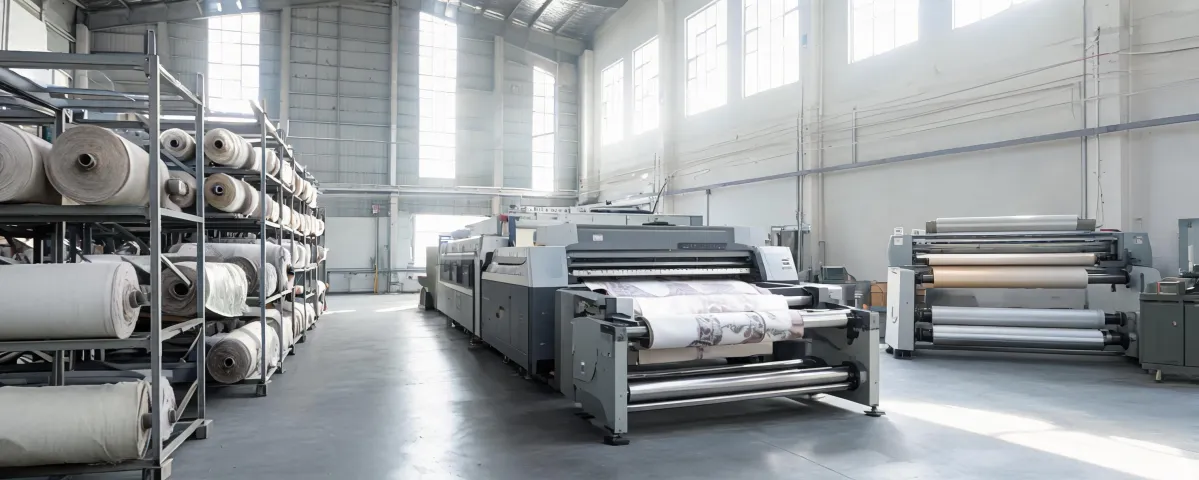
Continuous fabric, calendar speed, and ink laydown. Duty cycle should name hours per shift and the media. A headline speed without the test basis is an early screen, not a purchase number. Ask whether the quoted throughput used 4 colors or more, and at which pass count. Control interface and RIP workflow decide if your existing files can be sent without a new seat.
Shared facility constraints
Power, floor load, and the crate path are common to all three applications. Utilities requirement: volts, hertz, phase. Add the calendar or press as a second load. Commissioning scope says who levels the machine and who runs the first file. A bill of materials that skips the take-up will not match a room you already measured for that reel.
Standard width versus a custom media path
One side of the trade keeps a standard configuration: fewer special parts, a shorter document list, and a print width the seller already builds. The other side asks for an application-specific configuration when the fabric, the coating, or the roll handling will not fit that standard path. Neither side is settled by this page. Write which constraint is mandatory and which is only preferred, and let the quotations show the deviation.
Headline rating versus a stated test basis
A speed or a resolution on a cover is useful for sorting replies. It is not comparable until the media, the ink laydown, the pass count, and the room conditions are named. The opposing view treats the headline figure as enough for a budget screen. Use it that way if you must, then refuse to award the order on that figure alone. Factory acceptance test language, if you add it, should cite the same file you care about.