Selection evidence, not a winner
Transfer paper path
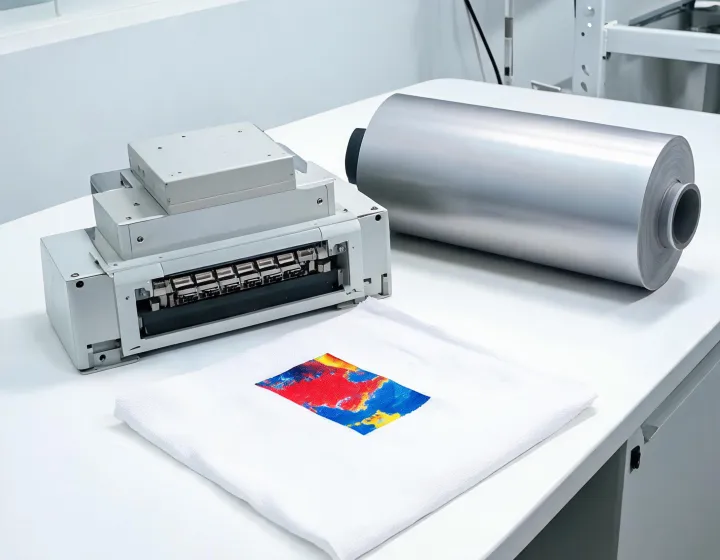
Printer lays dye on paper. A heat press or calendar moves it to polyester. Ask for paper width, ink channels, and press temperature plus dwell as supplier statements. A 45 second dwell at 190 C is an example of the kind of pair you should demand, not a setting this desk has validated. Consumables are paper plus ink. The press may be a second purchase.
Direct fabric path
The printer addresses coated fabric. Paper may disappear from the bill of materials and pretreatment or a calendar may appear. Throughput must state the fabric and the coating. If your shirts are cut pieces rather than rolls, say that. A direct process quoted for roll goods does not answer a platen question.
Commercial duty versus a light frame
Duty cycle, hours per shift, and preventive maintenance separate a light desktop frame from a production frame. Noise level and ambient temperature belong in the same comparison when the machine shares a room with people. Rated power and utilities requirement stop a frame that cannot be fed from your panel from looking cheaper on a short sheet.
Documents that travel with the choice
Request a current datasheet, a drawing, and any factory acceptance test scope you are willing to pay for. Certificates such as a model-specific safety file stay attached to the supplier offer. They do not become a credential of this sourcing desk. Specification deviation rows should show where a seller substituted a narrower width or a different ink set.
Trade-offs written as opposing views
Lowest equipment price versus comparable lifecycle scope
One purchasing view takes the lowest printer price when every other line is truly the same. That can reduce the capital line. The opposing view prices consumables, spare parts list, commissioning scope, freight, and the heat step before calling any offer lower. This desk follows the second view for comparison sheets, because a printer-only number hides the calendar, the ink, and the incoterm. If you still want the short number for an internal screen, label it as equipment only so it is not mistaken for delivered cost.
Standard configuration versus application-specific configuration
A standard width and a standard 4-color ink set keep the document pack smaller and may shorten the questions a factory must answer. An application-specific path, such as an extra light ink or a direct fabric coating, can be necessary when the job will not accept the standard media. Write the mandatory difference. Leave preferred extras in a column that suppliers may decline. Neither choice is marked correct here.
Repeatability across a shift, control interface locks, and ingress protection claims are further lines if your quality reviewer asks for them. If a seller does not state them, the cell stays open. See also the product labels, the evidence matrix on the services page, and the procurement brief.